RE-PRODUCIRSE
SELF-REPLICATION
Obra interdisciplinaria con marionetas
An Interdisciplinary Puppet Performance
Funciones en Platea Teatro a Mil
24 de enero – 22:00 hrs / 25 de enero – 19.00hrs / 21.00hrs
Teatro la Memoria
Proyecto financiado por el Fondo de las Artes Escénicas / Creación y/o producción de montajes escénicos / Creación y producción – Interdisciplinar
Project funded by the Performing Arts Fund / Performance Creation and/or Production / Interdisciplinary Creation and Production
Selected by the Teatro a Mil International Theatre Festival,
2026 edition
RESEÑA DE LA OBRA
SYNOPSIS
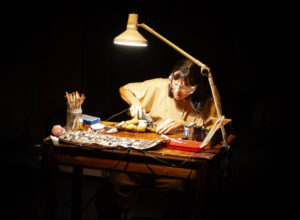
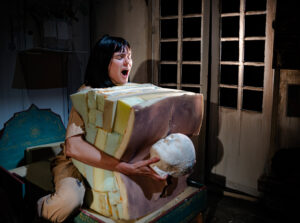
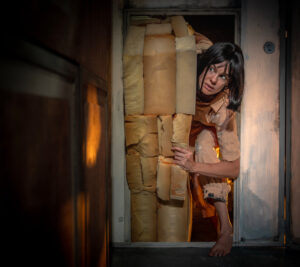
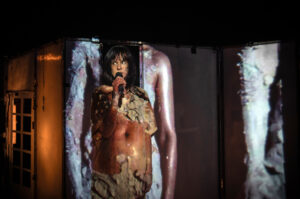
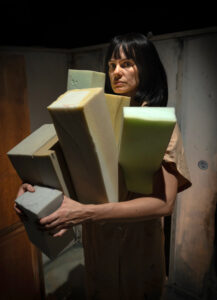
Una mujer sin nombre ni apodo vive sola en una casa. Siempre ha sentido que una sombra organizada de seres maneja el destino de cada acción que realiza: el movimiento de sus ojos, de su pecho al respirar, el conjunto de oscilaciones que componen un estornudo, es como si alguien estudiara el movimiento humano de manera minuciosa y la guiara en su accionar.
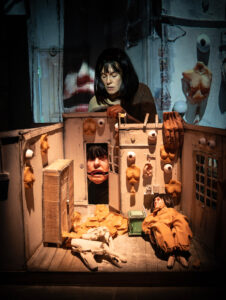
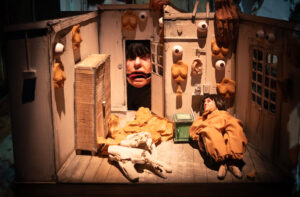
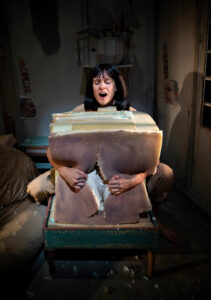
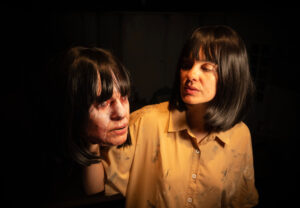
No se siente especial, ni un aporte al mundo pero desea tanto reproducirse así misma, no en el sentido biológico, sino material. Eso le da sentido a su existencia: la obsesión de construir sus réplicas a pesar de su falta de amor propio. Quizás quiere ser ella la sombra que maneje el destino de otra, y luego contemplar el deseo de aquella creación queriendo convertirse en la sombra de la reproducción de su reproducción.
A woman with no name or nickname lives alone in a house. She has always felt that an organized shadow of beings controls the destiny of every action she performs: the movement of her eyes, the rise and fall of her chest as she breathes, the set of motions that make up a sneeze. It is as if someone were studying human movement in minute detail and guiding her actions.
She doesn’t feel special, nor that she contributes anything worth perpetuating in the world. Yet she deeply desires to reproduce herself — not in a biological sense, but in material terms. This desire gives meaning to her existence: an obsession with making replicas of herself, despite her lack of self-worth. Perhaps she wants to become the shadow that governs the destiny of another, and then contemplate the desire of that creation to become the shadow of the reproduction of her reproduction.
DESCRIPCIÓN DEL PROYECTO
PROJECT DESCRIPTION
Re-producirse es un proyecto interdisciplinario estrenado en abril de 2025 en el Teatro La Memoria, financiado por el Fondo de Creación y Producción de Artes Escénicas y seleccionado por el Festival Internacional Teatro a Mil 2026.
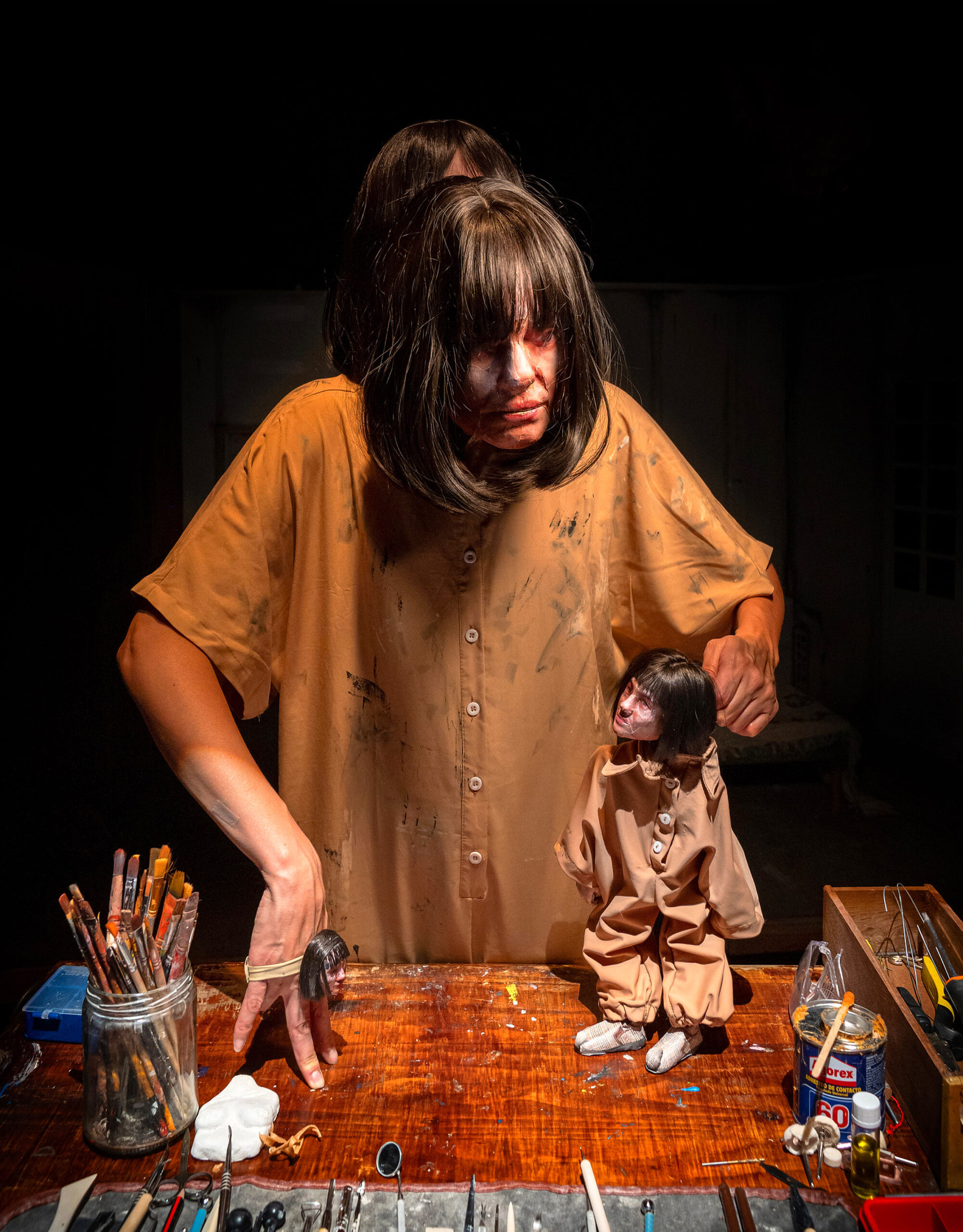
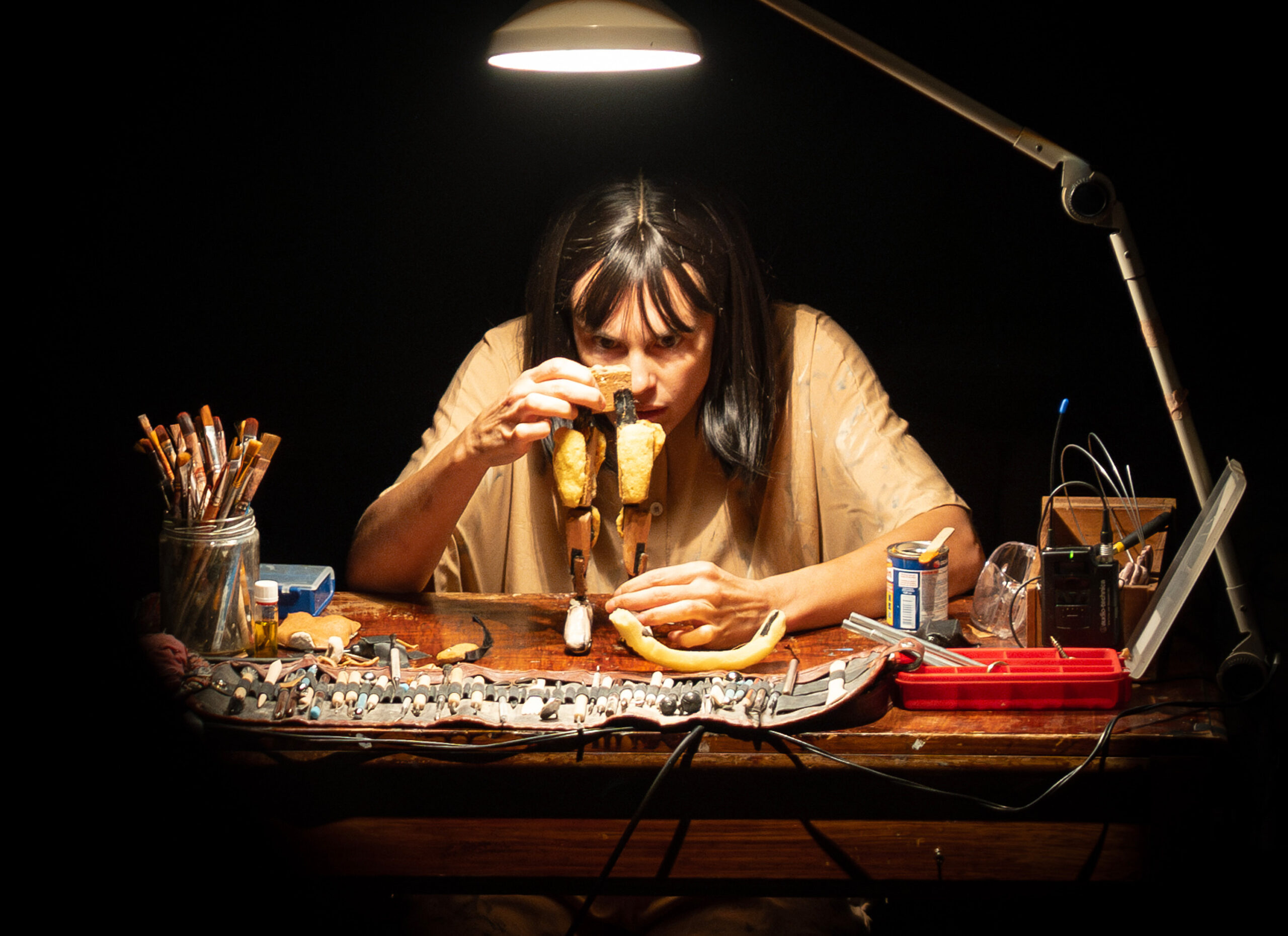
La obra propone una exploración sensible del oficio del teatro de marionetas, desplazando sus procedimientos hacia una reflexión escénica sobre el cuerpo, la identidad y el hacer. Desde esta práctica, Re-producirse aborda inquietudes y problemáticas femeninas vinculadas a los mandatos sexo-genéricos asociados a la reproducción y la producción, proponiendo una figura femenina que transforma su intimidad en un espacio de creación y pensamiento.
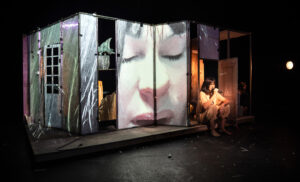
El proyecto se construye como un relato íntimo de una mujer que enfrenta el dilema entre su reproducción biológica y su reproducción material a través de marionetas, extendiendo esta operación al cuerpo escenográfico, lumínico, sonoro y multimedial. En este cruce, la creación se vuelve una forma de reflexión y resistencia.
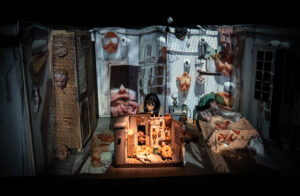
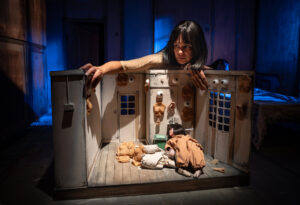
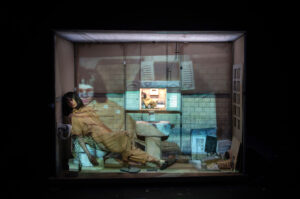
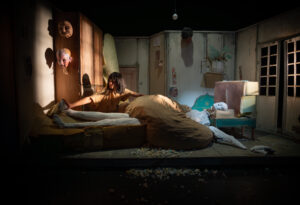
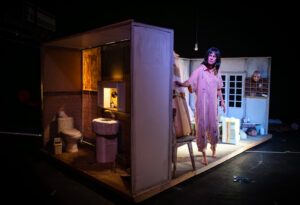
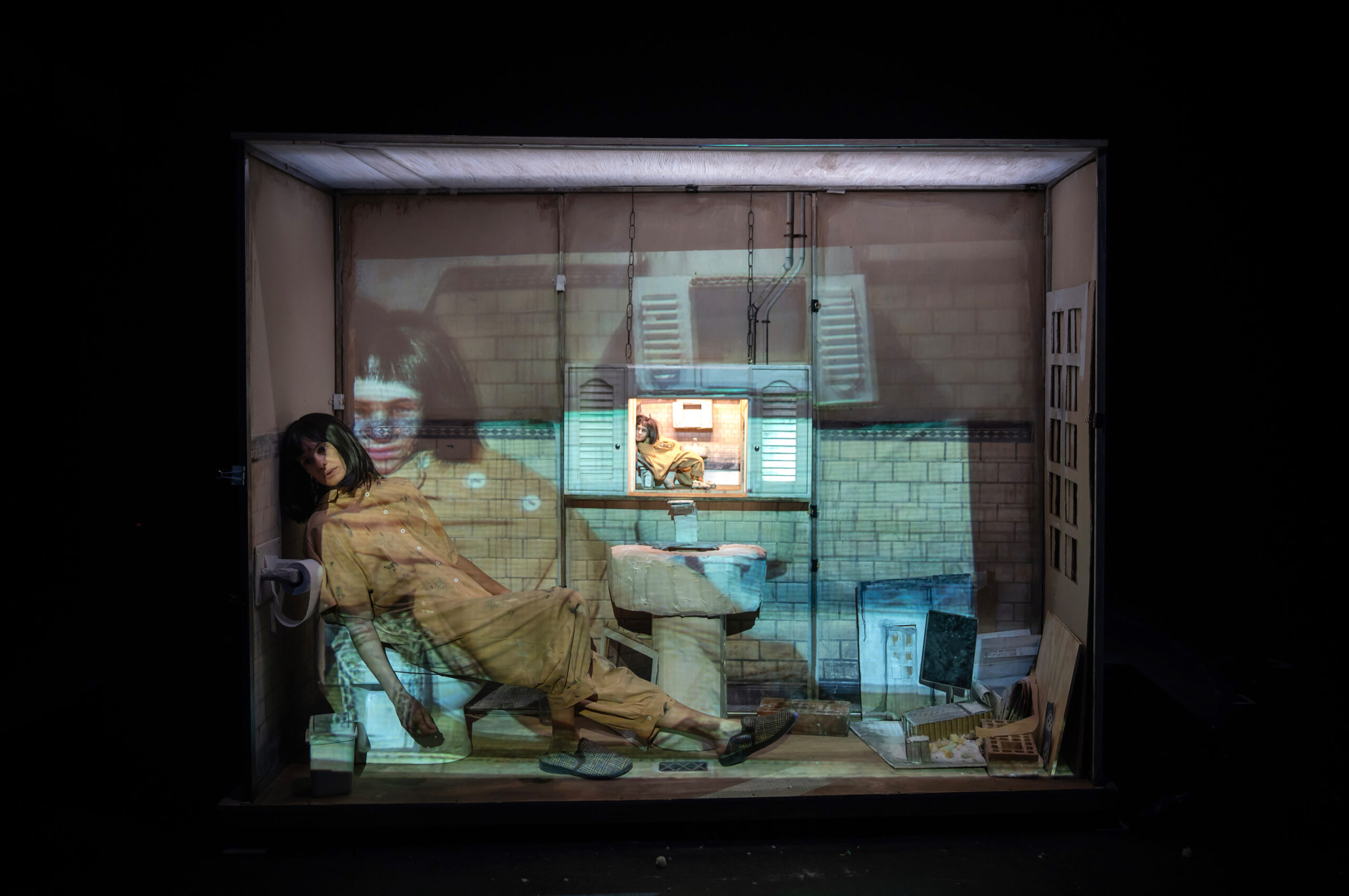
El relato transcurre en las noches de insomnio del personaje principal, una mujer que sospecha que es manipulada, y como en una especie de inercia se construye sucesivamente a sí misma para entender su humanidad, animando mundos cada vez más pequeños realizados como copia de su realidad.
Self-replication is an interdisciplinary project that premiered in April 2025 at Teatro La Memoria, funded by Chile’s National Fund for Performing Arts Creation and Production, and selected by the 2026 Teatro a Mil International Theatre Festival.
The work offers a sensorial exploration of the practice of puppet theatre, bringing its tropes and methods into an embodied reflection on the body, identity, and artistic practice. Self-replication engages in a feminist questioning of reproduction and production, subverting normative sex- and gender-based mandates through a female figure who transforms intimacy into a space for creation and thought.
The project unfolds as an intimate narrative centered on a woman’s dilemma between biological reproduction and material reproduction through puppetry. This inquiry extends to the scenographic, lighting, sound, and multimedia elements of the work. At their intersection, creation becomes a form of reflection and resistance.
Set during the sleepless nights of the main character, the story follows a woman who suspects she is being controlled. Driven by a kind of inertia, she repeatedly crafts replicas of herself in an effort to understand her own humanity, animating increasingly smaller copies of her reality.
VÍNCULOS CON ESPACIOS, INSTITUCIONES O REDES ASOCIADAS.
AFFILIATIONS WITH SPACES, INSTITUTIONS, AND NETWORKS
El proyecto “Re-roducirse” ha sido impulsado y fortalecido por una red diversa de espacios, instituciones y agentes culturales que han acompañado su desarrollo en distintas etapas, consolidando vínculos a nivel nacional e internacional.
La primera etapa del proceso creativo se llevó a cabo en el Espacio de Residencia Vale Arvoredo (Brasil), en el marco de la convocatoria internacional “Nuevos paradigmas: el cuidado como proceso ” de Iberescena, programa en el que Catalina Bize fue una de las dos seleccionadas a nivel internacional para desarrollar esta obra. Esta residencia permitió abordar los primeros cuestionamientos dramatúrgicos, espaciales y materiales del proyecto desde un enfoque situado en el cruce entre arte y cuidado.
Posteriormente, el Festival Internacional de Teatro del Biobío seleccionó el texto en su etapa inicial para integrar su Laboratorio de acompañamiento dramatúrgico, facilitado por Marcia Césped y Bosco Cayo, lo que permitió profundizar en la construcción narrativa y poética de la obra.
El Teatro La Memoria fue el espacio donde se realizó el estreno de la obra con una temporada de 12 funciones, y también acogió una serie de actividades asociadas, como un conversatorio moderado por Rodrigo Pérez y el equipo creativo, y una instancia anterior de trabajo de texto en el contexto de las “Prácticas de la Memoria: Diálogos compartidos”, bajo la guía de Leyla Selman.
En paralelo, el colectivo Espacio Fronterizo fue un actor clave en el desarrollo del texto final, ofreciendo un entorno de investigación y escritura, además de gestionar la lectura dramatizada de la obra en el Palacio El Adobe, en el Barrio Yungay, lo que amplió el diálogo del proyecto con el territorio y sus comunidades.
El proceso de creación y montaje de la obra fue posible gracias al financiamiento del Ministerio de las Culturas, las Artes y el Patrimonio a través del Fondo de Creación y Producción de Artes Escénicas, lo que permitió consolidar el equipo artístico y técnico necesario para materializar la propuesta.
The project Self-replication has been supported and strengthened by a diverse network of spaces, institutions, and cultural agents who have accompanied its development at different stages, fostering connections at both national and international levels.
The first stage of the creative process took place at the Vale Arvoredo Residency Space (Brazil), within the framework of Iberescena’s international call New Paradigms: Care as Process. Catalina Bize was one of two artists selected internationally to develop her project. The residency provided a space to explore its initial dramaturgical, spatial, and material questions from an approach situated at the intersection of art and care.
Subsequently, the Biobío International Theatre Festival selected the text in its initial stage to participate in its Dramaturgical Accompaniment Laboratory, facilitated by Marcia Césped and Bosco Cayo. This process enabled a deeper exploration of the work’s narrative and poetic elements.
The work premiered at Teatro La Memoria, with a run of 12 performances. The venue also hosted a series of associated activities, including a public discussion with the creative team moderated by Rodrigo Pérez, as well as the dramaturgy workshop “Practices of Memory: Shared Dialogues,” in which the text was further developed under the guidance of Leyla Selman.
In parallel, the collective Espacio Fronterizo played a key role in the development of the final text, providing a space for research and writing, and organizing a staged reading of the work at Palacio El Adobe, in the Yungay neighborhood. This opportunity broadened the project’s dialogue with its local context and communities.
Self-replication was created and produced with the support of Chile’s Ministry of Cultures, Arts, and Heritage through the Performing Arts Creation and Production Fund. This funding enabled the consolidation of an artistic and technical team essential to the development of the work.
EQUIPO ARTÍSTICO
CREATIVE TEAM
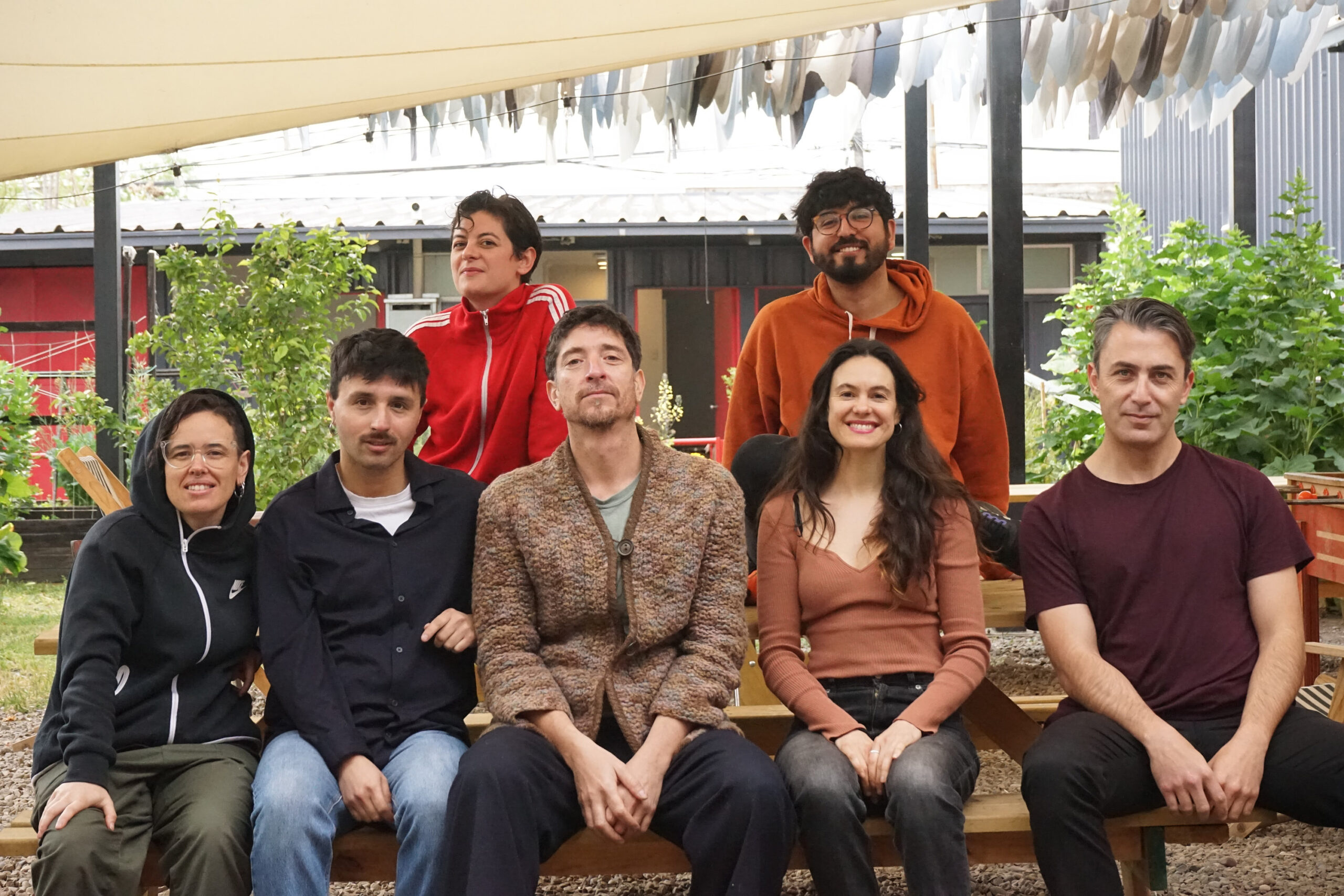
El equipo responsable de la obra “Re-producirse” cuenta con una sólida experiencia en las artes escénicas, visuales y técnicas, desarrollada a través de distintos proyectos y colaboraciones en Chile y Francia. Aunque esta es la primera obra en conjunto del equipo completo, sus integrantes tienen un amplio recorrido en sus respectivas áreas.
La directora, junto con el asistente de dirección e iluminador, han trabajado previamente en el Colectivo Principio Material, centrando sus investigaciones en la marioneta como eje central de la puesta en escena.
Dramaturgia y Dirección: Catalina Bize del Campo / Asistente de dirección: Nicolás Vergara Nuñez / Diseño escenográfico y vestuario: Laurene Lemaitre / Diseño de iluminación: Matías Segura Soto y Laurene Lamaitre / Diseño Sonoro: Ximena Sanchez Egaña / Diseño Multimedial: Alex Waghorn Gallegos / Tramoya: Tam Astudillo / Producción: Nicolás Fernandois / Dramaturgismo y Acompañamiento escénico: Moisés Angulo Matamala / Acompañamiento dramatúrgico: Marcia Césped Laplechade, Espacio Fronterizo, Javier Swedsky, Aproximaciones a la palabra, FTB. / Fotografía: Marcos Ríos / Diseño Gráfico: Gabriel del Campo
The creative team behind Self-replication has substantial experience across the performing, visual, and technical arts, developed through a range of projects and collaborations in Chile and France. While this is the first work created collectively by the full team, its members each have extensive individual trajectories in their respective fields.
The director, assistant director, and lighting designer have previously collaborated within the Principio Material Collective, a theatre company whose research centers on puppetry and the puppet as a central axis of performance.
Dramaturgy, and Direction: Catalina Bize del Campo / Assistant Director: Nicolás Vergara Nuñez / Set and Costume Design: Laurene Lemaitre / Lighting Design: Matías Segura Soto y Laurene Lamaitre / Sound Design: Ximena Sanchez Egaña / Multimedia Design: Alex Waghorn Gallegos / Stage Management: Tam Astudillo / Production: Nicolás Fernandois / Dramaturgical and Scenic Accompaniment: Moisés Angulo Matamala / Dramaturgical Accompaniment: Marcia Césped Laplechade, Espacio Fronterizo, Javier Swedsky, Aproximaciones a la palabra, FTB / Dramaturgical Accompaniment: Marcia Césped Laplechade, Espacio Fronterizo, Javier Swedsky, Aproximaciones a la palabra, FTB / Photography: Marcos Ríos / Graphic Design: Gabriel del Campo
CONTACTO
CONTACT
Productor / Producer: Nicolás Fernandois +56 9 34825515
Jefe Técnico / Technical Director: Matías Segura +56 9 76164831 matisegu@gmail.com